What Franklin County Homeowners Need to Know Before Replacing Their Roof
If you own a home in Columbus, Westerville, Hilliard, or anywhere else in Franklin County — a roof replacement is one of the biggest calls you’ll make as a homeowner. Get it wrong and you’re looking at permit problems, voided warranties, insurance headaches, or a roof that doesn’t last half as long as it should.
Here’s everything you need to know before the first shingle comes off.
Is It Time for a Full Roof Replacement or Just Repairs?
Signs Your Roof Has Reached the End of Its Lifespan
Ohio’s freeze-thaw cycles are brutal on roofs. If your asphalt shingles are curling at the edges, losing granules into the gutters, or you’re finding soft spots when you walk the deck – those aren’t patch jobs. That’s a roof telling you it’s done.
Most asphalt roofs in Columbus last 20 to 25 years. Metal roofs last 40 to 70. If yours is past 20 and showing any of the above signs, a repair is just buying time.
When Patching Is a Waste of Money
A few missing shingles after a windstorm? Fix it. But if a contractor quotes you a patch on a 15-year-old roof with widespread granule loss and failing flashing – you’re spending money to delay the same conversation by 18 months.
How a Professional Inspection Determines the Right Call
A real inspection takes 30 to 45 minutes. The roofer walks the roof, checks the attic ventilation, looks at flashing around chimneys and vents. If they quote you from the driveway in 10 minutes, get a second opinion.
Roofing Materials Available to Franklin County Homeowners
Asphalt Shingles — Still the Most Common Choice in Columbus
Architectural shingles are still what most Columbus homes get — they’re affordable ($6,500–$10,000 for most homes) and widely available. The tradeoff is lifespan. Ohio winters and summer heat load take years off asphalt faster than in milder states.
Metal Roofing — Why More Franklin County Homeowners Are Switching
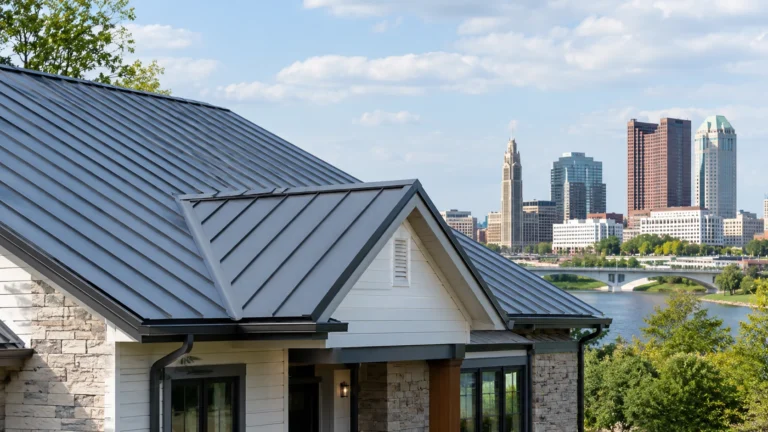
Standing seam residential metal roofing has grown steadily in Columbus and across Franklin County. It handles ice dams, hail, and Ohio’s temperature swings better than any other material. Upfront cost is higher ($28K – $44K), but the lifetime cost per year is lower — and you won’t be re-roofing in 20 years.
It’s also a strong fit for older Columbus neighborhoods like Victorian Village, German Village, and Clintonville where homeowners think long-term.
Flat and Low-Slope Roofing Options for Columbus Homes
Ranch homes and additions with flat or low-slope sections need membrane systems — TPO, EPDM, or modified bitumen. Make sure whoever quotes this work has actual flat roof experience, not just pitched roof work.
Which Material Holds Up Best Against Ohio’s Weather
Metal, by a wide margin. For budget-conscious homeowners, 30-year architectural shingles beat basic 3-tab every time.
Understanding Ohio’s Roofing Permit Requirements
When Franklin County Requires a Roofing Permit
Full roof replacements in Columbus require a building permit — no exceptions. The Columbus Department of Buildings and Zoning Services handles permits within city limits. Suburbs like Dublin, Westerville, and Hilliard run through their own building departments.
How to Pull a Permit in Columbus, Ohio
Your contractor pulls the permit — not you. If any roofer tells you to pull it yourself as the homeowner, that’s a red flag. Licensed contractors are required to do this themselves. Columbus Building & Zoning is at 757 Carolyn Ave and permits can be applied for through the city’s online portal.
What Happens If You Skip the Permit
Unpermitted roofing work can block a home sale, require costly tear-offs, and give your insurance carrier grounds to deny a future claim. No legitimate reason exists to skip it.
How to Choose a Roofing Contractor in Franklin County
Ohio Roofing License and Insurance Requirements to Verify
Ask every contractor for proof of general liability insurance (minimum $1 million per occurrence) and active workers’ compensation. Call the insurance company directly to verify — don’t just accept a certificate.
Red Flags to Watch Out for When Getting Quotes
- Asking for full payment upfront
- No physical Columbus-area address
- Quotes 40% lower than every other bid
- High-pressure “today only” pricing
- Nothing in writing
Why You Should Never Hire a Storm Chaser After Hail Season
After every major hail event in Columbus, out-of-town contractors flood into Franklin County knocking on doors. They use your insurance payout, disappear when problems surface, and have no local accountability. Hire someone who was here before the storm and will still be here two years after it.
What to Look for in a Written Roofing Contract
Material brands, product lines, labor warranty terms, permit responsibility, payment schedule, completion timeline, and cleanup. If any of it is vague, ask before you sign.
How Much Does a Roof Replacement Cost in Columbus, Ohio?
Average Cost Breakdown by Material and Roof Size
| Material | Avg. Cost (1,500–2,000 sq ft home) |
|---|---|
| Architectural Shingles | $8,000 and $16,000 |
| Metal Shingles | $20,000 – $32,000 |
| Standing Seam Metal | $20,000 – $32,000 |
What Drives Costs Up in Franklin County Specifically
Steep pitches, older brick chimneys requiring custom flashing, rotted decking discovered after tear-off, and full tear-off requirements when a home already has two shingle layers — all push costs higher than the base estimate.
Hidden Costs Homeowners Forget to Budget For
Permit fees ($200–$500), decking replacement, new ridge and soffit vents, fascia repairs. A good contractor flags these possibilities upfront rather than surprising you mid-job.
Filing a Homeowner’s Insurance Claim for Roof Damage in Ohio
What Ohio Insurance Policies Typically Cover
Sudden storm damage — hail, wind, fallen trees. Not age-related wear. Not deferred maintenance. Review your declarations page before assuming anything is covered.
How to Document Roof Damage Before the Adjuster Visits
Time-stamped photos from multiple angles, interior water damage photos, hailstone size documentation next to a ruler, and Weather.gov historical records for the storm date. This documentation matters if the adjuster undervalues the damage.
Common Reasons Franklin County Claims Get Denied
Pre-existing unaddressed damage, late reporting after an event, and maintenance exclusions are the most common. Don’t wait months to file after a storm.
How a Roofer Can Help You Navigate the Claims Process
An experienced local roofer can meet your adjuster on-site and document damage correctly. One important note: any contractor who offers to waive your deductible is violating Ohio Revised Code Section 3901.82. Walk away from that offer.
Best Time of Year to Replace Your Roof in Columbus
How Ohio Winters and Summers Affect Installation Quality
Asphalt shingles need 40°F and rising to seal properly. Cold-weather installations risk shingles that never thermally seal. Metal roofing is more forgiving year-round but extreme cold still affects crew performance.
Why Spring and Fall Are Peak Roofing Season in Central Ohio
April through June and September through November are the windows where temperatures cooperate, crews are sharp, and materials ship on schedule. Book early — demand is high and good contractors fill up fast.
What Happens When Roofing Is Done in Cold or Wet Weather
Moisture trapped under new materials causes decking rot from the inside. No reputable Columbus roofer starts a job in rain or with rain in the immediate forecast.
What to Expect During the Roof Replacement Process
How Long a Full Replacement Takes in Columbus
One to two days for most single-family homes. Metal roofing runs two to four days. Complex rooflines and multiple penetrations add time.
Preparing Your Home and Property Before the Crew Arrives
Move vehicles away from the house, clear garage staging areas, take wall art off exterior walls, and keep pets indoors. Crews typically start at 7 AM.
What Happens to Your Old Roof and Waste Materials
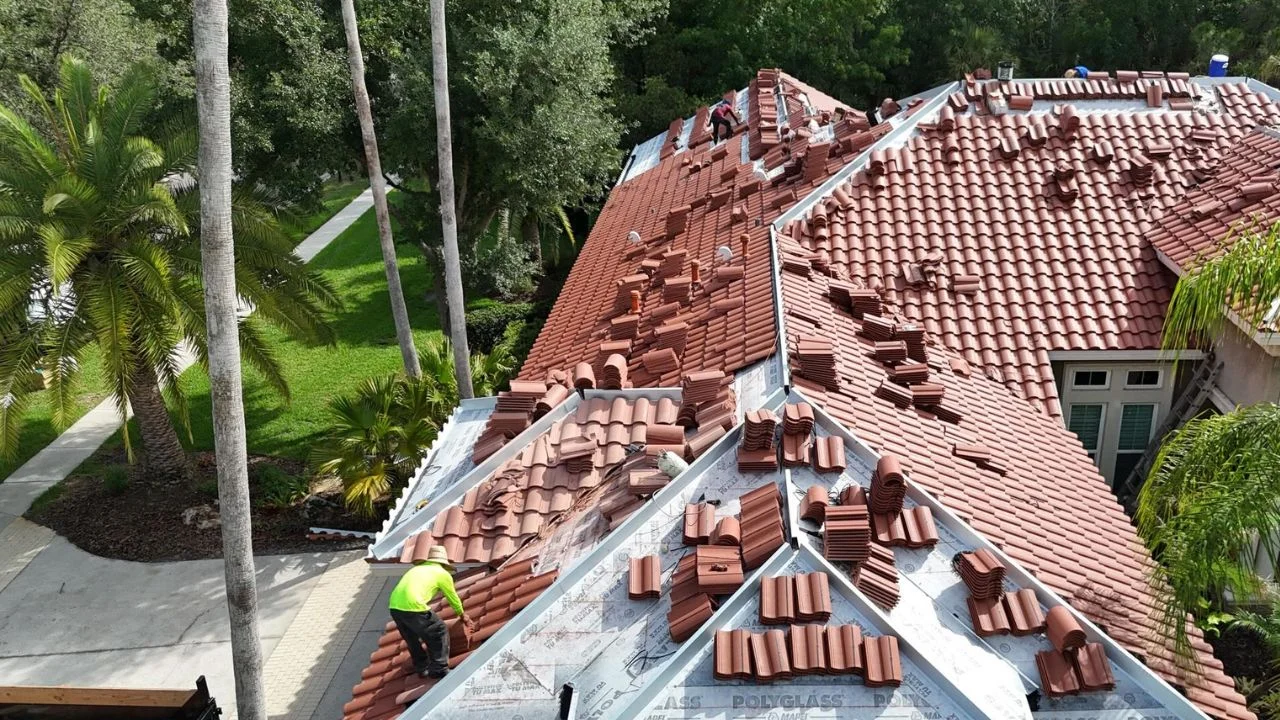
Old shingles go into a dump trailer throughout the day. A magnetic nail sweep of the yard and driveway is standard at job completion. If cleanup isn’t mentioned in the contract, ask.
Final Walkthrough and What to Inspect Before Signing Off
Check the ridge cap, all flashing, re-secured gutters, attic ventilation, and ground cleanup before releasing final payment.
Warranties You Should Demand From Your Columbus Roofer
Manufacturer Warranty vs. Contractor Workmanship Warranty
Manufacturer warranties cover material defects. Workmanship warranties cover installation quality — typically 2 to 10 years, though GAF Master Elite and Owens Corning Preferred certified contractors can offer 25-year workmanship coverage. Get both in writing.
What Voids a Roofing Warranty in Ohio
Uncertified installers, unauthorized modifications, improper attic ventilation, and power washing are the most common warranty killers.
How Long Your New Roof Should Last in Franklin County’s Climate
A properly installed 30-year shingle roof realistically lasts 20 to 28 years in Columbus’s climate. A standing seam metal roof lasts 40 to 60 years. One roof for most homeowners’ entire ownership period.
Neighborhood and HOA Considerations in Franklin County
HOA Approval Requirements Before You Replace Your Roof
Dublin, New Albany, Pickerington, and Westerville subdivisions commonly have architectural review requirements. Check your CC&Rs for approved materials, colors, and submission timelines before signing a contract. Approval can take two to four weeks.
Historic Districts in Columbus That Have Specific Roofing Rules
German Village and the Harrison West area fall under Columbus Historic Preservation Office oversight. Contact them at 109 N. Front Street before proceeding. Metal roofing is often approved in historic districts because period-appropriate metal is historically consistent with pre-1950 construction.
Energy Efficiency and Roofing in Columbus Homes
The right roof and proper attic ventilation can meaningfully reduce your AEP Ohio cooling costs. Attic temperatures in Columbus in July can hit 150°F without adequate ventilation — that heat pushes straight down into your living space and forces your AC to work harder. Ridge vents paired with soffit intake vents address this. Standing seam metal roofing also creates a natural thermal air gap under the panels.
For energy-efficient material credits, check current IRS guidance and AEP Ohio’s rebate page – these programs change regularly.
Franklin County Roofing FAQs
Do I Need to Be Home During the Roof Replacement?
You don’t have to be home all day, but stay reachable by phone. Be there at the start and end of the project.
Can I Stay in My House While the Roof Is Being Replaced?
Yes – most Columbus homeowners do. It’s loud but safe. If you work from home or have noise-sensitive pets, plan accordingly.
How Do I Know If My Contractor Is Legitimate in Ohio?
Verify their Columbus contractor registration with the Building & Zoning Department, check their BBB of Central Ohio standing, call their insurer to confirm active coverage, and call references from jobs completed in Franklin County within the last 12 months.
Is Metal Roofing a Good Investment for Columbus Homes?
If you’re staying in the home for 10 or more years – yes. Lower lifetime cost, longer lifespan, better Ohio weather performance, and potential insurance premium reductions make it the stronger long-term investment.
Ready to Replace Your Roof in Franklin County?
Know your material options, verify your contractor, pull the permit, and get everything in writing before a nail comes out. We’re a local Columbus metal roofing company, and we give straight answers about what your roof actually needs. Call us at (614) 612-9797 for an honest inspection and estimate.